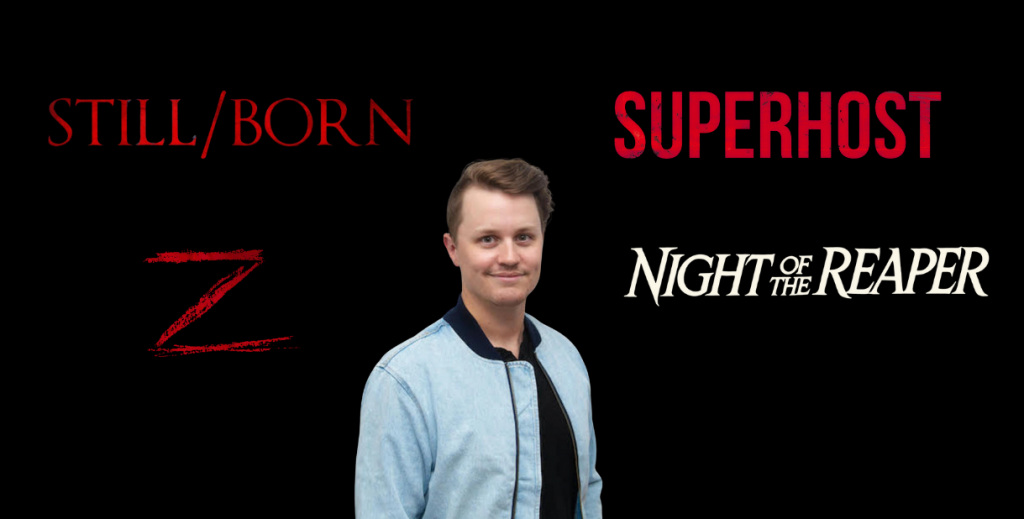
This interview was first published in German in the genre magazine Splatting Image.
Brandon Christensen is one of those genre filmmakers who doesn’t just tell horror stories — he lives them. His films often grow directly out of personal experiences (parental fears, everyday stress, strange encounters) that he transforms into works that are by turns darkly funny and genuinely unsettling. Whether he tackles postpartum nightmares (Still/Born, 2017), a child’s imaginary friend (Z, 2019), or the toxic perfectionism of influencer culture (Superhost, 2021), Christensen’s work carries a refreshing honesty that has become rare in modern horror.
I’ve been following his career for a while, especially since Superhost, whose humor and uncomfortable intimacy grabbed me immediately. And with Night of the Reaper (2025) — a lovingly crafted homage to 1980s slashers — Christensen proves he not only understands strong themes and character work, but also has a deep love for genre tradition.
In conversation, Christensen comes across as open, thoughtful, and grounded. He talks about his DIY beginnings, his versatility as director, editor, and VFX artist, his return to Canada, and his close, almost familial connection with filmmakers like Colin Minihan and Kurtis David Harder — a group shaping a new, loosely connected wave of Canadian horror.
Adrian Gmelch: Thank you for being here with me today. I would say you’ve become one of the most interesting voices in contemporary indie horror over the last years, especially with domestic horror, parental paranoia, anxieties, and recently also slasher territory. But maybe just introduce yourself a bit to the readers. What is your background? Where are you coming from? And how did your love for film develop?
Brandon Christensen: Yeah, I grew up with horror films, and I think it all stems back to when I was five or six and the Stephen King It miniseries (1990) came out. I don’t know why, but my parents let me watch it. I was in kindergarten, and it basically traumatized me for eight years. I remember all these nightmares I had. It was this recurring thing where my brother and I would have to fight Pennywise the clown, and then we’d hang up his body in our closet. Every time I went to bed, I’d side‑eye my closet thinking, “Oh my God, he’s going to get out and I’m going to have to reset the cycle.”
It was something I grew up fearing. I always had this base level of fear until eighth grade, when I watched it again with some friends. I was so scared to rewatch it, and then when I did, I thought, “Oh, it’s not actually that scary.” I’d spent my whole childhood being scared of this thing. When I came back to it later, I could see through the cracks of how cheap it was and how it wasn’t really that scary. But when I was six, it was the scariest thing I’d ever seen.
That sort of left a hole in me. Suddenly I wanted to feel that again — I wanted to be scared again. So I started renting any horror movie I could find, watching anything I could just to get that feeling back. You start with the classics like Halloween, Texas Chainsaw, things like that. It became part of my development — always seeking that high of being scared. My friends and I would try to scare each other. We’d walk down dark alleys at night, saying, “Man, if Michael Myers walked out of that gate, what would you do?” We’d amp each other up and build that fear.
It was always part of my life — that craving to be scared. It’s gone down now that I make films myself; it’s a bit different, but I like the idea of giving someone else that feeling. That has driven a lot of the things I’ve made.
Adrian Gmelch: And you’re initially from Canada, right?
Brandon Christensen: Yeah, I was born and raised in Calgary, Alberta.
Adrian Gmelch: Today are you operating more from the United States or are you still in Canada?
Brandon Christensen: I’m back in Canada. I was in the U.S. for 15 years, and then in 2022 my family and I moved back.
Adrian Gmelch: Nice. So both backgrounds — U.S. and Canada now.
Brandon Christensen: Yeah.
Adrian Gmelch: And when you were shooting your movies, was it more in Canada or the U.S., or both?
Brandon Christensen: Both. I’ve shot four of my six films in Canada, and then I shot The Puppetman and Superhost in the U.S. Even before moving back home, I was coming home to shoot films. It was cool because I left Calgary due to a lack of opportunity. I went to Toronto for film school, tried to find a path there — it didn’t work out. That led me to Las Vegas, where I created my career from scratch and worked my way up.
But for some reason, I always ended up going home to make movies. When we decided to move back — kind of a crazy thing at the tail end of COVID — it felt like I had grown and knew I could still make movies there. So I could go home and continue building. And that’s what’s happened, which is really cool.
Adrian Gmelch: Your career is fascinating because you’re not just a director and screenwriter — you also do special effects for your films and others, and you’re also an editor on some. How do you handle doing all of this at the same time, and how does it influence your work as a director and screenwriter?
Brandon Christensen: When I started, I was just trying to be a director. But it’s really hard to just be a director now — there’s so much competition. My thing became doing low‑budget projects. I’d take $500 and do a music video. I’d load my car with everything I had to shoot on, show up at an abandoned warehouse, and shoot for 20 hours by myself. Then I’d take it home and edit it. That was how I made money — very little money, tons of work.
But it taught me how to budget, how to create something that looked bigger than it was for very little, because I was doing so many jobs. It taught me how to light, shoot, edit. It became built into how I work. When I did my first film, my mindset was: how do we make it as cheap as possible? Because that’s all I knew.
There were a lot of visual effects, and we didn’t have money for it. So I figured it out. I started doing tutorials online and learned a ton fast. The next movie, I could go bigger — bigger VFX ideas — so I learned that stuff. Every project broadens what I’m able to do.
As a side benefit, independent filmmakers started reaching out with 20 shots needing work. That became a cool side hustle. I like visual effects because when you’re writing, directing, or editing, you must be focused — you can’t watch a movie while you work. But with VFX, I can turn off my brain and just do it. It’s often very binary — is the shot done or not? Sometimes it’s more creative, but often it’s painting something out.
It’s almost therapeutic. But it all started with having no money and wanting to make stuff. I learned so many disciplines that I’m still building on today.
Adrian Gmelch: I really like this DIY mentality. It’s like the David Lynch method — doing everything on the movie. And you can feel it: the movies are more personal because you did so much yourself.
Maybe let’s dive into your filmography — the first two features, Still/Born and Z. They’re more domestic horror, focusing on domestic fear and parental anxieties. I watched both, and I really liked them — as a young dad, I can relate to the topic. How was it creating these movies? What drew you to themes like parental anxieties?
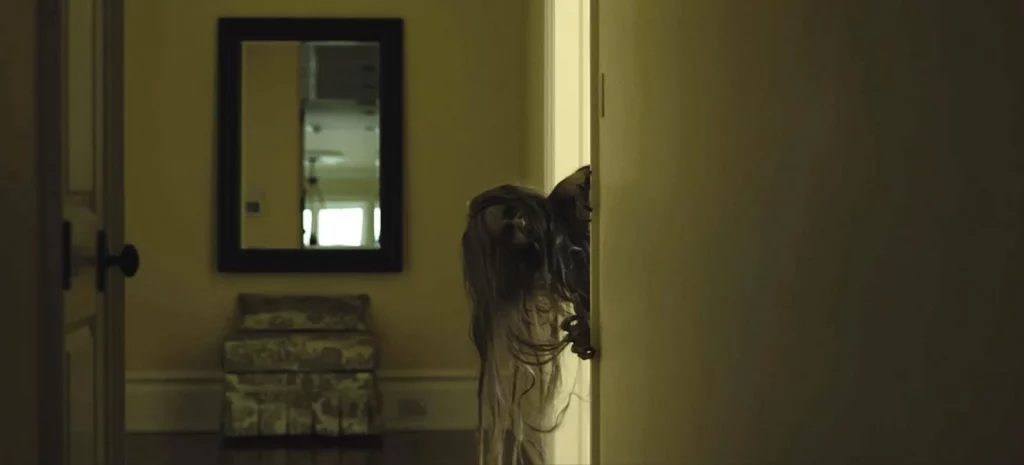
Creepy scene from Still/Born (Copyright Vertical Entertainment)
Brandon Christensen: I was living it. When I made Still/Born, I had a five‑year‑old and a baby around a year old. I was living through that postpartum craziness that happens when you have a kid. I had this image of a mother delivering two kids, but one didn’t make it. There’s this weird disconnect between husband and wife. The nine months of pregnancy are a lot of work for the woman — the husband doesn’t feel the baby the same way. If a woman has twins and she’s loving both inside her, and only one comes out, the husband thinks, “I’ve still got a baby,” and he doesn’t feel the loss the same way.
I thought that was an interesting contrast — a twist on loss and grieving. It created a situation where they couldn’t communicate: he didn’t understand why she wasn’t happy, and she couldn’t explain it.
When I finished that, I looked at my life again. My oldest son had just gone to kindergarten — his first time away all day. He’d come home with new ideas and stories. The idea became: what if he brought home something we didn’t approve of and we had no control over? What could that do? My wife and I developed that idea into Z.
It was taking things in our life and asking: what’s the worst thing that could happen? That’s how I come up with ideas. How old is your kid?
Adrian Gmelch: Nearly two.
Ok, you’re still in the early “trying to kill themselves at all times” period. When they get older, it changes — you worry differently. When they get freedom, it’s hard to imagine what they’ll do with it. A kid going upstairs at a friend’s house isn’t a big deal — but what could happen? They could fall. So we push it to the extreme.
Sometimes it works, sometimes it doesn’t.
Adrian Gmelch: I like that the two movies are very female‑driven. I have one scene in mind from Z: the mother in the bathtub imagining Z — it’s so creepy.
After that came Superhost. A different topic — more like rental horror or Airbnb horror. There are a lot of movies now in that subgenre. What made you want to explore this genre and the sharing‑economy era?
Brandon Christensen: It came out of nowhere. I was at a festival in Toronto for Z, staying at an Airbnb — a really nice condo. When I used the toilet, it didn’t work. I tried flushing; nothing. I wrote the host. He told me what to do; it still didn’t work. So he came over with a plunger and plunged the toilet I’d peed in while we made small talk. It was the most bizarre scenario.
I thought: what if one of us was a psychopath? The system isn’t supposed to allow this type of interaction — it’s all automated. Once you break that wall and meet in person, it’s weird.
I liked the idea of a crazy host in an Airbnb. Then I thought of bloggers — travel bloggers — and how everyone is pretending to be someone they’re not. The couple pretends to be happy but they’re miserable. The host has killed the actual owners and tries to play host while hiding what she did. Everyone is lying.
I didn’t set out to do an influencer‑type film; it just naturally lent itself to that.
Adrian Gmelch: Yeah, I had fun with it because we’ve all booked Airbnbs — you can imagine what could happen.
Brandon Christensen: And also, I didn’t want to become the “mom horror guy.” I didn’t want to do another film about a kid who’s ten. I wanted to evolve, so I went toward comedy for a bit — something fun and light.
Adrian Gmelch: After Superhost came The Puppetman. This time it’s more like Final Destination in some ways, and there’s a strong performance by Alison Gorski. The power of the movie was her performance. It reminded me of Maika Monroe in It Follows. What was your approach? It’s not easy with a Final Destination‑style film — you need something different.
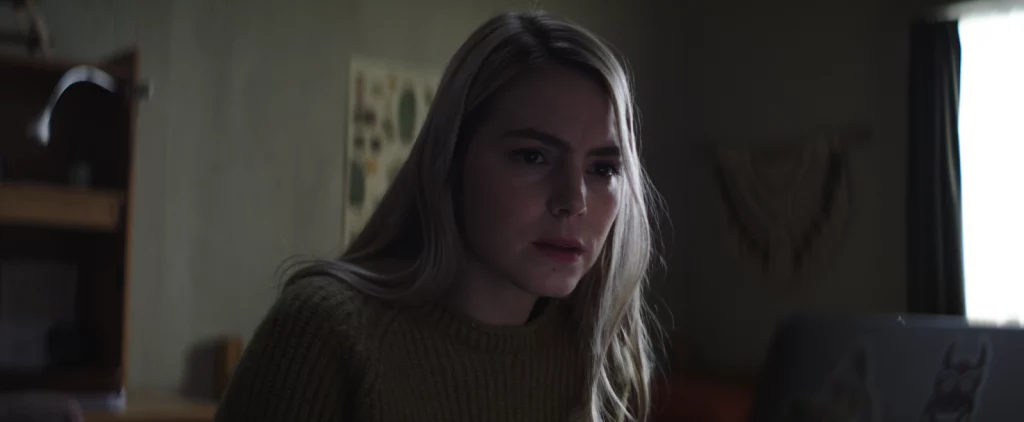
Alyson Gorske is in the footsteps of Maika Monroe in The Puppetman (Copyright 2024 Lighthouse Home Entertainment)
Brandon Christensen: That was weird. I was in post-production on Superhost, and the producer of Puppet Man, Matt Manjourides, cold‑wrote me on Facebook. He had projects he wanted to develop to pitch to Shudder. He sent some loglines — a giant snake movie, a giant alligator movie — and one called The Puppetman: a guy comes home and kills his wife, not in control.
I told him I’d think about that one. I talked to my brother — we’d never written together before — and we started throwing ideas around. We came up with something fast. We wrote it with no pressure, no real idea of making it. Then Shudder said yes, and suddenly it was happening.
It was tough because all my movies up to then had small casts. Suddenly I had a group of five friends, plus a seance scene. Shooting big groups is complicated — lots of speaking roles, blocking, movement. It can explode fast.
It was a hard film. I didn’t write it to make it, so I didn’t design it around what I knew how to do. We wrote sequences with no plan for execution. We didn’t have the money to do things right, so I knew I’d be solving problems constantly.
There were around 315 VFX shots; I did about 308. It consumed me for a year and a half. Some things turned out well — the fire stuff works. The bridge scene, not so much; I didn’t shoot it properly. It turned into an uneven experience. I’m proud of a lot of it and wish I could fix some things.
It was the biggest failure of my films — it came out, did nothing, people didn’t care. It was a lesson: you have to keep pushing, think of everything, fight for things. You can’t just let people do everything in low budget. You must work closely with everyone. It taught me how to delegate and handle bigger sequences. It was tough, but I came out stronger.
Adrian Gmelch: I still had a good time with the movie and the performance. And it’s a mix of Final Destination and It Follows. I like that, original.
A German critic said your horror movies are pure “standard horror”. I disagree. I think you found an interesting indie‑horror voice — authentic horror. Your movies are authentic. I think you’re between two other horror genres — elevated horror and mainstream Blumhouse horror. Indie horror. It’s a good balance.
Still/Born and Z could have been art‑horror films, but they’re never over‑intellectualized, which I appreciate.
Brandon Christensen: Well, I’m not smart enough to do that, so that’s probably why. (laughs)
Adrian Gmelch: No, but now there are many art‑horror movies — too heavy, too metaphorical. Getting back to pure horror is good. What’s your opinion on elevated horror? Just a critic label or something more?
Brandon Christensen: Part of it is definitely a critic label. Some filmmakers — like the Philippou brothers — are doing elevated work because it’s different from traditional stuff. I do make standard horror with a twist — I take tried‑and‑true things and add myself to them.
Eggers and Aster are just smarter than me. They’re more talented, with different viewpoints. I’m a traditional filmmaker — I shoot and edit like films from the ’80s and ’90s, because that’s what I grew up with. They have a modern lens, which attracts big audiences. My films probably resonate more with people who grew up when I did.
Horror is extremely varied, with many subgenres. I’m not in competition with anyone. There’s room for everyone. I’m slowly finding my thing. There’s a reason those filmmakers make giant, successful movies — they have fresh takes.
Jordan Peele, for example, strikes both comedy and horror with precision because he honed his craft. Horror has no limit.
Adrian Gmelch: Yeah, I’d also add Osgood Perkins.
Brandon Christensen: No one makes movies like him. He’s insane — in a good way.
Adrian Gmelch: By the way, he shoots a lot in Canada.
Brandon Christensen: Yeah.
Adrian Gmelch: Two last questions. There seems to be a loose Canadian horror wave forming around you and collaborators like Colin Minihan or Kurtis David Harder. You appear across each other’s credits. Do you think there’s a Canadian horror wave coming from your group?
Brandon Christensen: For sure. I’ve known Colin since the early 2000s — online message boards. I was in high school. Colin was always ahead — making music videos, winning awards. I was envious and looked up to him.
I followed him on MySpace, then Facebook. I was the annoying little brother checking in. He was always helpful.
Around 2015, he had a zombie script set in the desert. I lived in Las Vegas and said we should shoot it there. I knew we could get everything cheap. I had the crew. I invited him and Stuart Ortiz to Vegas, and we went through the movie. It made sense.
I stopped taking client work for three months — didn’t get paid — and just worked with them. It taught me invaluable lessons about directing, fighting for your vision, not compromising without reason.
When Colin was in post, he asked if we should write something together. I told him the idea for Still/Born. We quickly developed it. He helped raise money. We shot in Calgary, where Kurtis lived. He joined because Colin knew him from Extraterrestrial. It all came together organically.
We made several movies together. Then our careers grew. It’s hard when Kurt wants to direct and I want to direct — sometimes we can’t collaborate, and that’s fine.
Adrian Gmelch: You just remain friends and do your own thing. Or become something like the Vicious Brothers, directing together.
Brandon Christensen: Yeah. (laughs) Colin still has Digital Interference. When I was in film school, they had a demo reel DVD, and I showed it in class. It was always my dream to be part of Digital Interference. For a short time, I was — I made a few movies with them. We’re still friendly. We outgrew that scale, and now we help each other.
Adrian Gmelch: You’re now recognized as a genre filmmaker — you’ve won a lot of awards. One more quick word about your latest film Night of the Reaper. In Germany, it will be released at the end of February 2026.
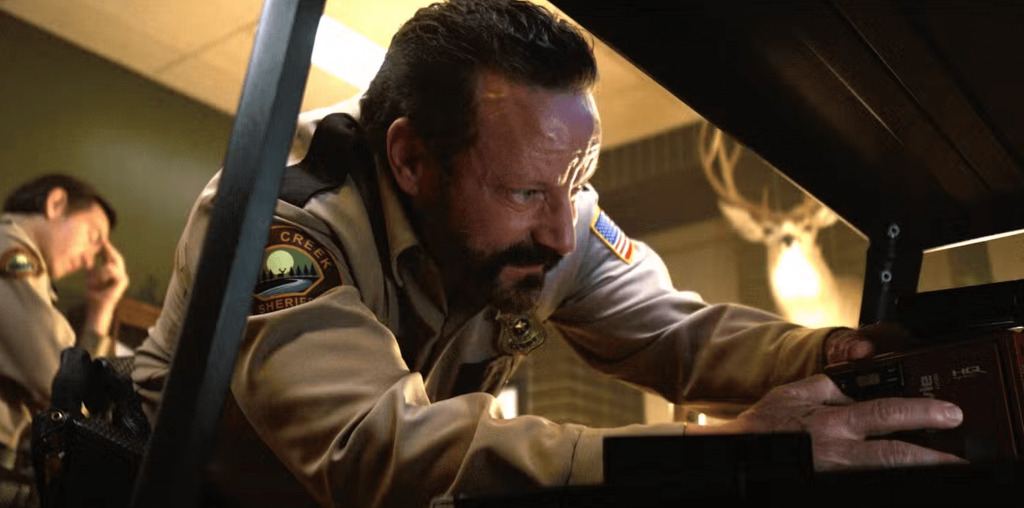
Scene from Night of the Reaper, a homage to 1980s slasher films (Copyright Lighthouse Home Entertainment)
Brandon Christensen: Yeah, someone bought it there, that’s great!
Adrian Gmelch: We’re waiting. Maybe tease a bit for the readers.
Brandon Christensen: It’s a love letter to ’80s and ’90s slashers and babysitter films. I saw When a Stranger Calls in junior high at a birthday party. The opening 20 minutes were seared into my memory — a woman getting calls: “We checked the children,” constant torment until she’s killed. Such a simple setup — one girl in a house. You never even see the kids.
Still/Born is a woman in a house. It felt on‑brand to do a babysitter film. My brother and I had been talking about it since 2020, before Puppet Man. It’s been done iconically many times, so you have to do your own thing.
So we took two movies and mashed them together: a standard babysitter movie mixed with a police procedural, whodunit mystery. They collide at the end and become something different.
There are many visual references to other films. I scraped my childhood and put it into the film. We recreated the ’80s — something I’d never done. We have cool music from that time that adds to it.
The response has been great — probably my biggest film so far. It’s a very Halloween film — set in October, full of decorations. People say it’ll be a yearly watch, which is a huge honor. I feel like it might grow in status as a yearly Halloween film.
It was fun doing something different but familiar, ticking off bucket‑list items: make an ’80s movie, make a babysitter movie, tie it all together into something surprising.
Adrian Gmelch: Sounds amazing. I’m looking forward to it and your next movies.
Brandon Christensen: The next one after Reaper is found footage — totally different!
Adrian Gmelch: Oh, okay, intriguing! Thank you so much for your time.
Brandon Christensen: Thank you.